
Cary City Directory Runs and Collections
Cary does not have a verified, uninterrupted standalone city directory series in the inspected sources. The strongest starting shelf is regional: the Wake County catalog's Raleigh City Directory record, the companion Raleigh Suburban Directory record, and the materials marked Olivia Raney Local History. Those listings should be treated as a year-by-year question for the reference desk, not as proof that every volume contains Cary. A Raleigh or suburban volume may include Cary, a route, or a nearby community, but the entry must be checked in the actual image.
| Collection | Years | Where held | Access |
|---|---|---|---|
| Hill's Raleigh City Directory | 1933-35, 1940-43, 1943-44, 1945-46, 1948, 1954-55 | NCGenWeb links and Olivia Raney reference holdings | Check scan or consult staff |
| News & Observer Raleigh Directory | 1939 | Genealogy directory listing and local-history reference | Confirm the volume's Cary coverage |
| Raleigh and suburban directory holdings | 1883, 1886, 1903-35, later runs | Catalog, DigitalNC, and regional collections | Volume-specific review |
| Polk suburban directory | 1984-85 item surfaced | Olivia Raney and regional collections | Reference inquiry |
| Cary High yearbooks and Cary News | Selected years; newspaper 1967-71 and 1974-2001 | Olivia Raney and NC Archives microfilm | Consult staff or microfilm |
Gaps matter. The cited Hill's years are named holdings, not a claim of yearly publication or complete Cary coverage. A missing name can reflect a changed spelling, a regional boundary, an unlisted household, or a gap in the available run.
Why Cary Uses Raleigh Directory Shelves
Olivia Raney Local History Library at 4016 Carya Drive in Raleigh is the main reference destination for this work. Its catalog records mark many directories, maps, tax and deed microfilm, yearbooks, and newspapers as “Consult Staff,” meaning the material is archival or non-circulating. Call before a visit and ask staff to check the specific year, title, and whether a city, suburban, or street section is present. Cary Regional Library at 315 Kildaire Farm Road is the convenient local branch for catalog help, library databases, and referral to the deeper collection.
The Olivia Raney catalog record shows the kind of local-history shelf lead that should be saved with its year and call-number context.
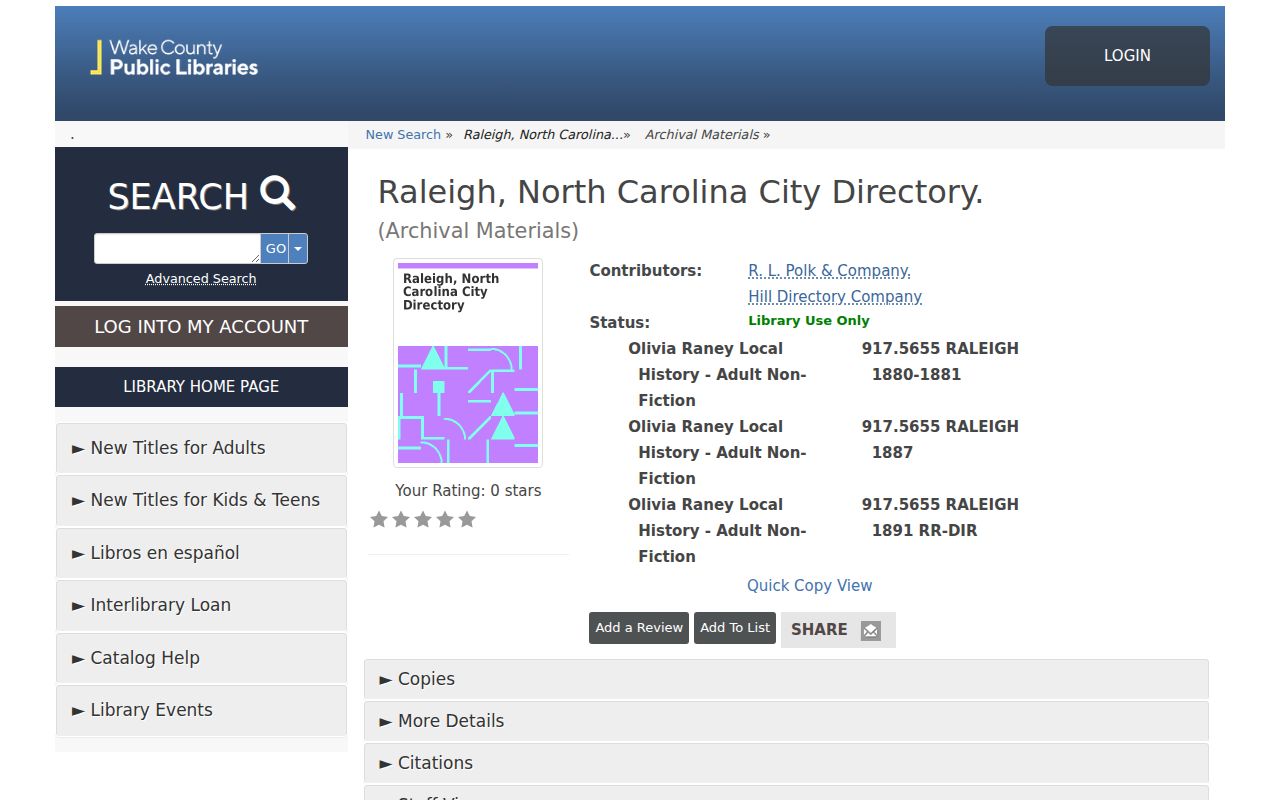
A catalog result identifies a starting point, but reference staff and the physical or digitized volume determine whether a particular Cary household is actually indexed.
Cary Directory Years and Regional Bridges
The Wake NCGenWeb directory list identifies Hill Directory Company volumes for 1933, 1934, 1935, 1940, 1941, 1942, 1943, 1943-44, 1945-46, 1948, 1954, and 1955. It separately names a 1939 News & Observer Raleigh Directory. These are valuable bridges for a Cary search because Cary's earlier population and road network were closely tied to Raleigh and Wake County. They are not interchangeable records. Check the page image, spelling, street form, and the book's abbreviation key before adding a conclusion to a family file.
| 1933-35 | Named Hill's Raleigh sequence begins in the inspected genealogy list. |
|---|---|
| 1939 | News & Observer Raleigh Directory provides a separate regional lead. |
| 1940-43 and 1943-44 | Hill's entries continue through both annual and combined designations. |
| 1945-46, 1948, 1954-55 | Later named Hill's volumes can be checked against suburban growth and census timing. |
The digitized directory-year list makes it easier to choose a first volume instead of guessing at a long date range.
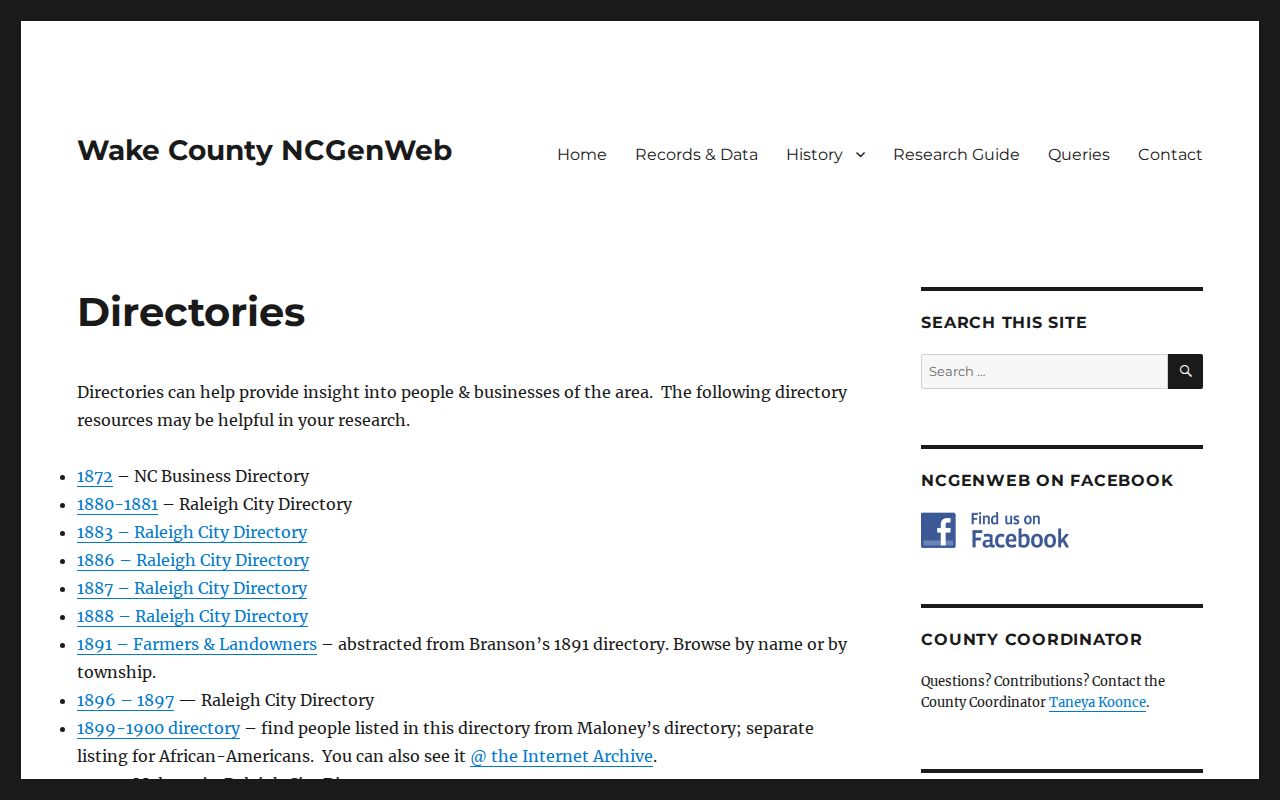
Use the list as a finding aid, then preserve the cited page, directory year, and entry details from the source image itself.
Read a Cary City Directory Entry
A city directory line is compact, so it needs a careful reading. A Hill's, Polk, Raleigh, or suburban entry can identify a surname and given name, a spouse in parentheses, an occupation, an employer or business, a street number, and a residence or business location. Some later volumes add telephone information or street and alphabetical cross-references. The exact fields vary by publisher and year. A printed address is evidence of how the directory compiler recorded a contact, not proof that every person in a household lived there on the date of publication.
| Name line | Record the spelling, initials, suffix, and spouse notation exactly as printed. |
|---|---|
| Address | Copy the number, street form, route, apartment, or corner reference before normalizing it. |
| Occupation or business | Use it to separate same-name people, then confirm with an independent record. |
| Status notation | Check the volume's key before interpreting home, room, widow, or similar abbreviations. |
| Cross-reference | Look for an alphabetical, business, or street section that points to another entry. |
- Criss-cross directory
- A directory arranged by street and number rather than by surname. A local full run was not confirmed, so ask Olivia Raney staff about a relevant volume.
- Householder index
- An alphabetical listing centered on the named household contact. It may omit other people in the home.
- Abbreviation key
- The publisher's guide to its shortened words and symbols. Photograph or transcribe it before relying on a code.
Note: An entry's meaning comes from its own publisher and year, so a code from one volume should not be carried into another without checking.
Cary News and Yearbook Clues
Directories are only one historical layer. The North Carolina Archives newspaper guide lists The Cary News on 73 microfilm reels for 1967-1971 and 1974-2001, code CarCN. Its visible 1972-1973 gap should remain a gap; search Raleigh papers rather than assuming missing issues. Notices can help locate a school, club, death, business opening, or address-era reference that gives a surname enough context for a directory search.
Cary High yearbook holdings at Olivia Raney include 1920, 1924-25, 1929, 1952-54, 1956-57, 1962, 1973-75, 1980-82, 1990, 2007, 2017, and 2020. They are an irregular sequence, not a complete run. A yearbook can supply a portrait, club, school year, or former-classmate lead, but it does not establish a current location.
The Wake County Historical Society resource list points researchers toward local-history and preservation networks that complement library and archive shelves.
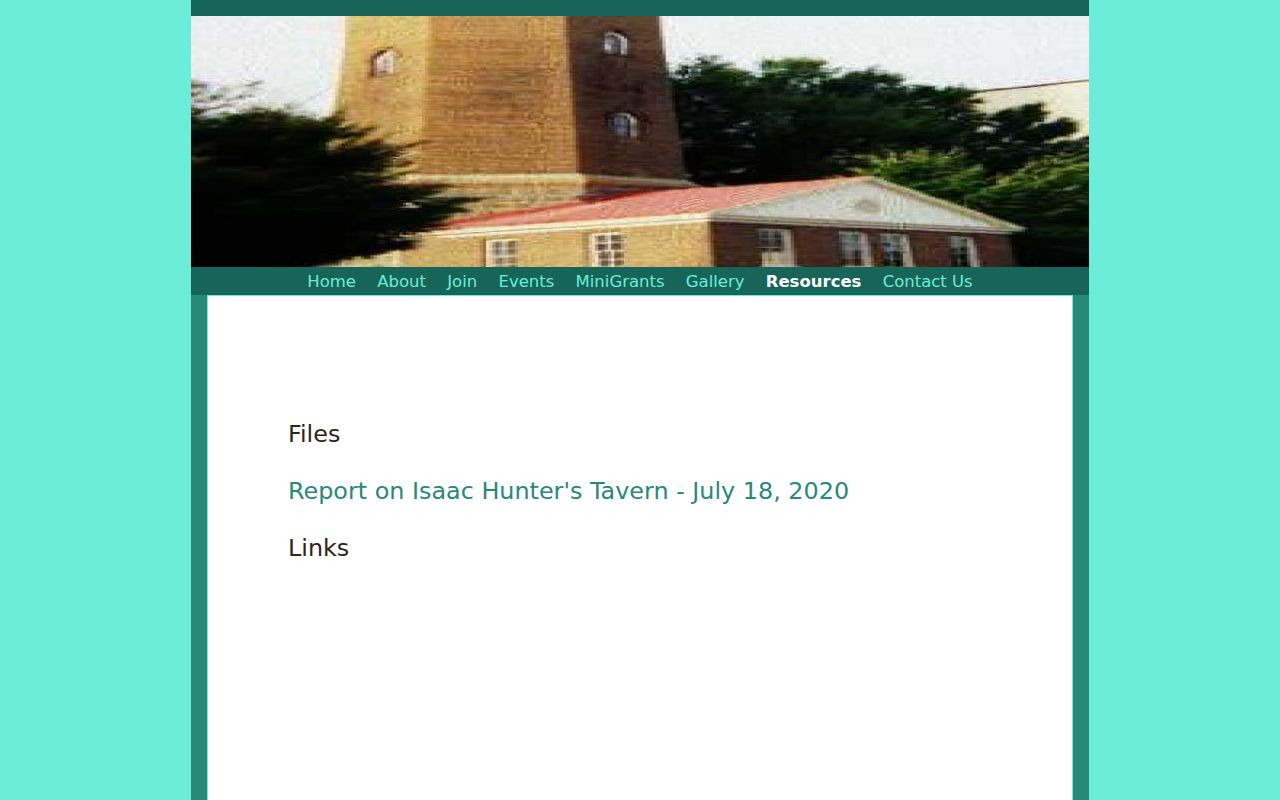
Those resource links are most useful after a directory or newspaper name has been tied to a particular Cary family, street era, or historic community.
Cary City Directories Across Growth Eras
Cary's record geography changed as the town grew. Frank Page's 1854 development and Cary's 1871 incorporation grew around the railroad junction, while later annexations and postwar neighborhoods changed how places were described. The preservation record identifies 1949 annexation beginning with Urban Terrace and Forest Park, then Veteran Hills, Russell Hills, Montclair, MacGregor Downs, Carpenter, Green Level, and western planned communities. An older volume can therefore use a route, rural community, or nearby Raleigh frame where a present-day researcher expects a Cary street.
This local history is a useful safeguard against a false negative. Search the surname with and without a middle initial, try the older community name, and compare the directory's date to a plat, deed, newspaper notice, or census schedule. Cary's historic Page-Walker setting, Hillcrest, Green Level, and Carpenter can all produce older place descriptions that do not match modern boundary language.
Trace a Cary City Directory Household
A household trail works best when each source is allowed to answer its own question. Directories can place a named contact at an address in successive published years. Federal census schedules are household snapshots, publicly released through 1950 under the 72-year rule. Deeds identify recorded parties and legal descriptions, while obituaries and cemetery material can provide a later family link. Keep the exact source date beside every finding. It prevents a later address, a new street form, or a same-name person from being pulled into the wrong history.
- Start with a scanned or library volume that shows a name, street, and publication year.
- Search the next available volume forward and backward, recording moves, spouse notation, and business changes.
- Check an available street or cross-reference section, then ask staff whether a relevant criss-cross volume exists.
- Pair the sequence with the nearest released federal census and compare names, ages, and nearby households.
- Use Cary News, Hillcrest or church-cemetery material, probate, and recorded instruments to test a disappearance or change.
When a directory find needs a present-day confirmation from an official custodian, use the separate Cary resident lookup workflow rather than treating a historical listing as current proof.
Cary Directory Gaps Need Archives
There is no confirmed continuous Cary city directory to search from end to end. When a name or address does not appear, return to the collection chain: ask Olivia Raney for an exhaustive title and year check; search the Wake catalog and DigitalNC; review the Cary News microfilm and Raleigh papers for the uncovered years; then use State Archives finding aids for county records, family papers, maps, and private collections. For an older address, Wake plat microfilm and the plat index can bridge a lot or subdivision name to later street language.
Olivia Raney also holds Wake deed microfilm, a plat index through 1981, official-map microfilm for 1885-1950, tax and treasury serials, and Cary population folders for 1975-1992. These are practical bridges when a directory gives only a route, a subdivision, or a surname. A legal description or map reference can lead back to the older form of an address, while a newspaper notice or census schedule can test whether the resulting household is the same one.
The fallback is evidence based, not guesswork. A no-result can mean the volume did not cover Cary, the household was not listed, the spelling differed, the source used a rural route, or the year is absent from the collection. Record which source was checked and what its coverage actually was. That small research log makes it possible to revisit the same Cary city directory question when another volume, image, or archive lead becomes available.